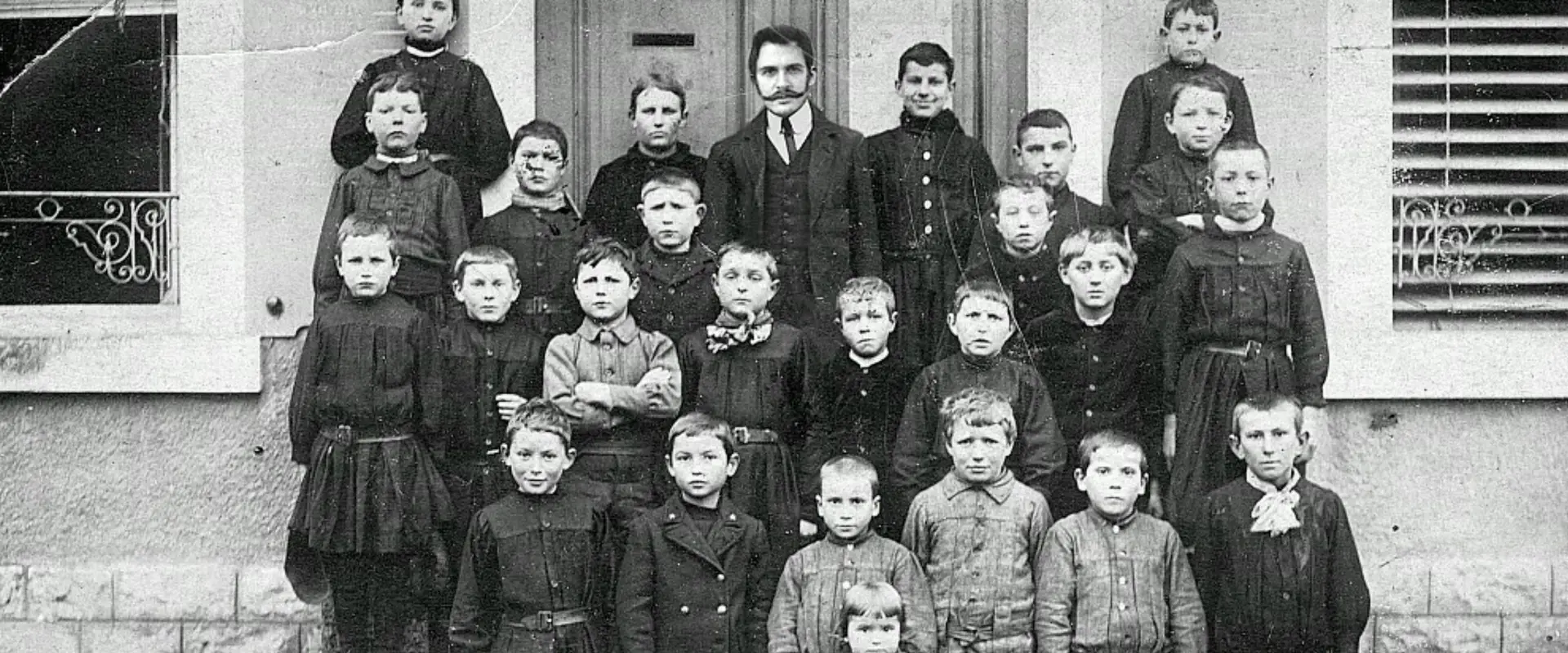
What if Facebook had existed in 1914? We created a character: Léon Vivien, 29 years old, a schoolteacher from Paris, recently married, about to become a father. His first status update went out on June 28, 1914, the day Archduke Franz Ferdinand was assassinated in Sarajevo.
Working under the authority of Jean-Pierre Verney, the historian behind the museum, the team prepared ten months of posts spanning from June 28, 1914 to April 1915. Every detail was researched and verified: the slang, the uniform changes, the rhythm of life in the trenches. Every anachronism was corrected, down to the period-accurate insults soldiers used for the Germans. Léon’s timeline filled with dispatches, drawings, period photographs, archive documents and sound files from the museum’s collection. He wrote to his wife. He argued with friends. He waited. Once he reached the front line, his account updated five or six times a day.
The announcement of the birth of Léon’s son alone generated nearly 3,000 likes and dozens of messages of congratulation, as if it were a real newborn. People who had never opened a history book were reading dispatches from the Somme between their morning commute updates. Teachers requested a classroom version. The French National Board of Education relayed the page across its regional sites.
The success of the campaign led to a book: Léon Vivien’s posts collected and published as a physical volume, with additional content and music accessible via QR code. The page remains live today, though Léon has not posted since April 1915.